The Divine Life & Civilizational Legacy.
From cosmic twilight he arose — and walked from royal palace, to forest hermitage, to the shore of liberation.
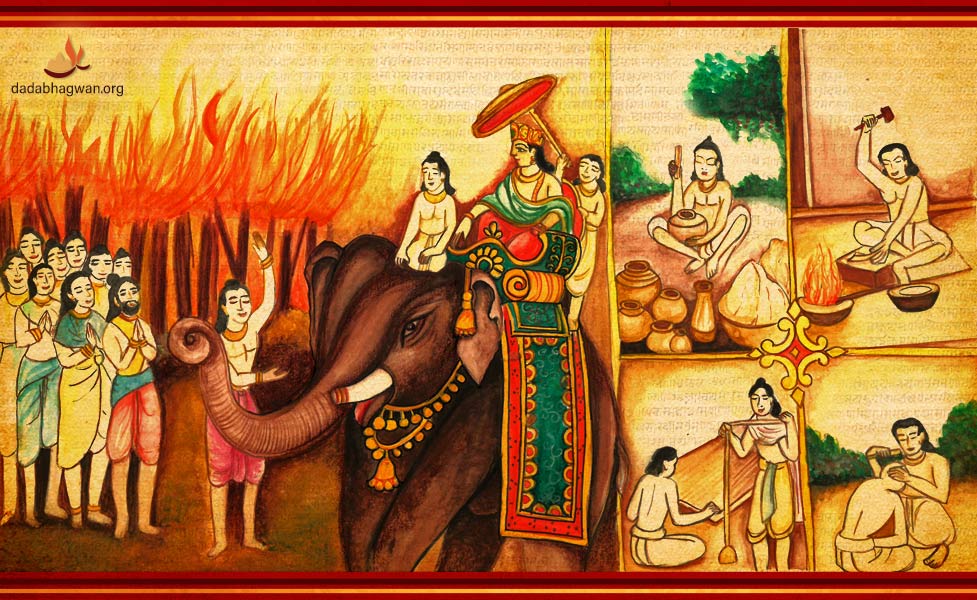
He gave the sword to defend, the pen to know, and the plough to feed — and then renounced them all.
The threefold gift of Rishabhanatha to humanity — civilization's first foundation.
When the wish-trees withered, he rose.
Jain cosmology speaks of an age — the Sushama-Dushama — when the kalpavriksha trees yielded every desire of mankind without effort. As that age waned, the trees ceased to bear fruit. Humanity stood without skills, without script, without governance, without recourse.
It was then that Rishabhanatha, son of Nabhi, took it upon himself to teach mankind every art necessary for survival — and beyond survival, every art necessary for liberation. He is the bridge between the age of effortless abundance and the age in which dharma must be learned, practiced, and transmitted.
The chronicle of Rishabhanatha.
From divine birth to absolute liberation — five cantos that re-shaped the world.
The Sacred Descent
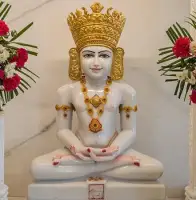
King Nabhi, the fourteenth and final Manu of the descending age, unites with the radiant Marudevi. She beholds fourteen auspicious dreams. The soul of the First Tirthankara enters her womb and the cosmos shifts.
The First King & the First Teacher
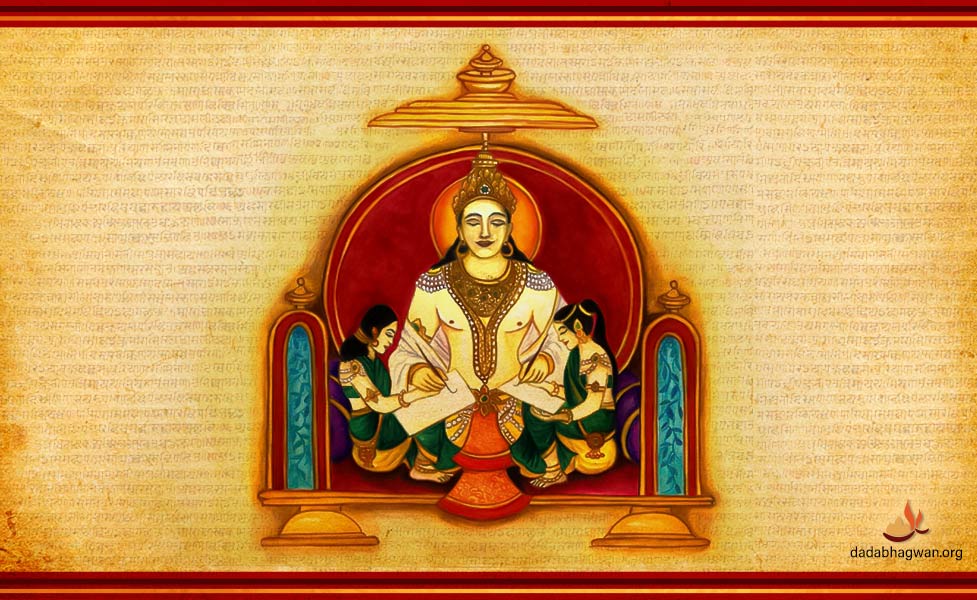
Crowned the first sovereign of mankind, Rishabhanatha teaches the seventy-two arts to his sons and the sixty-four arts to his daughters Brahmi and Sundari — the very lineage of letters and numbers begins here.
The Threefold Gift
To organise civilization, he establishes three proto-orders — Kshatriya (rulers, the sword), Aryya (traders & merchants, the script), and Sukshma (skilled artisans & cultivators, the plough). Society finds its form.
The Great Renunciation
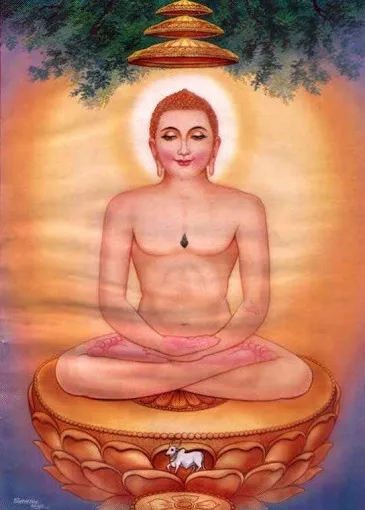
At the height of his sovereignty he removes his crown, his ornaments, his hair — and walks alone into the forest. For one full year he accepts no alms, until at the hands of his great-grandson Shreyamsa he breaks his fast with sugarcane juice — the first paranā.
Omniscience Beneath the Banyan
After a thousand years of unbroken austerity, beneath the banyan tree at Purimatāla he attains Kevala Jnana — pure, infinite, simultaneous knowledge of all things. He becomes the Jina, the conqueror, the Tirthankara.
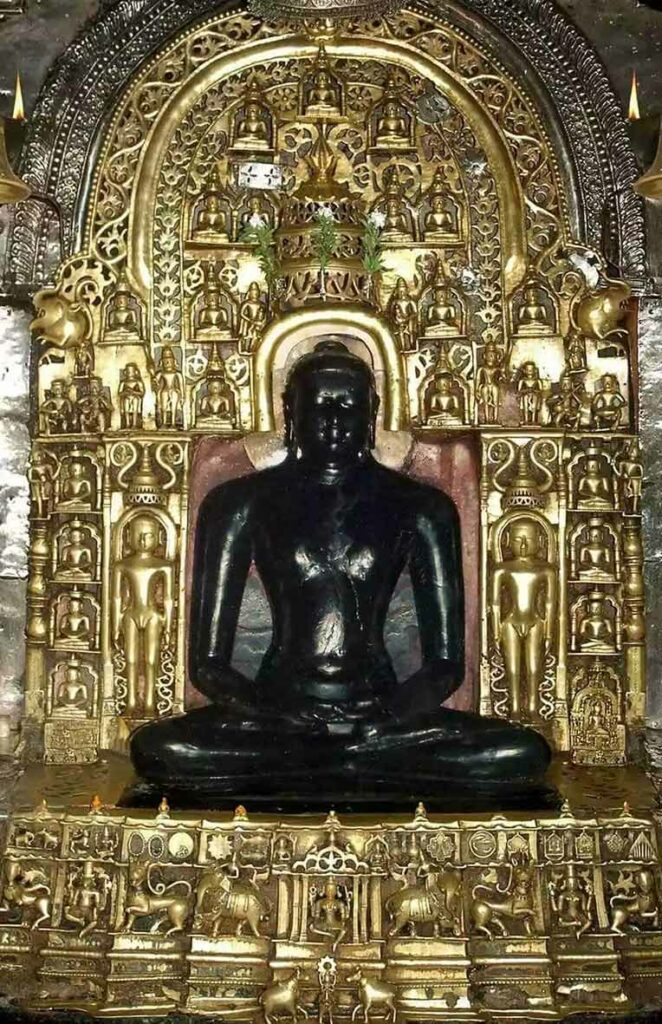
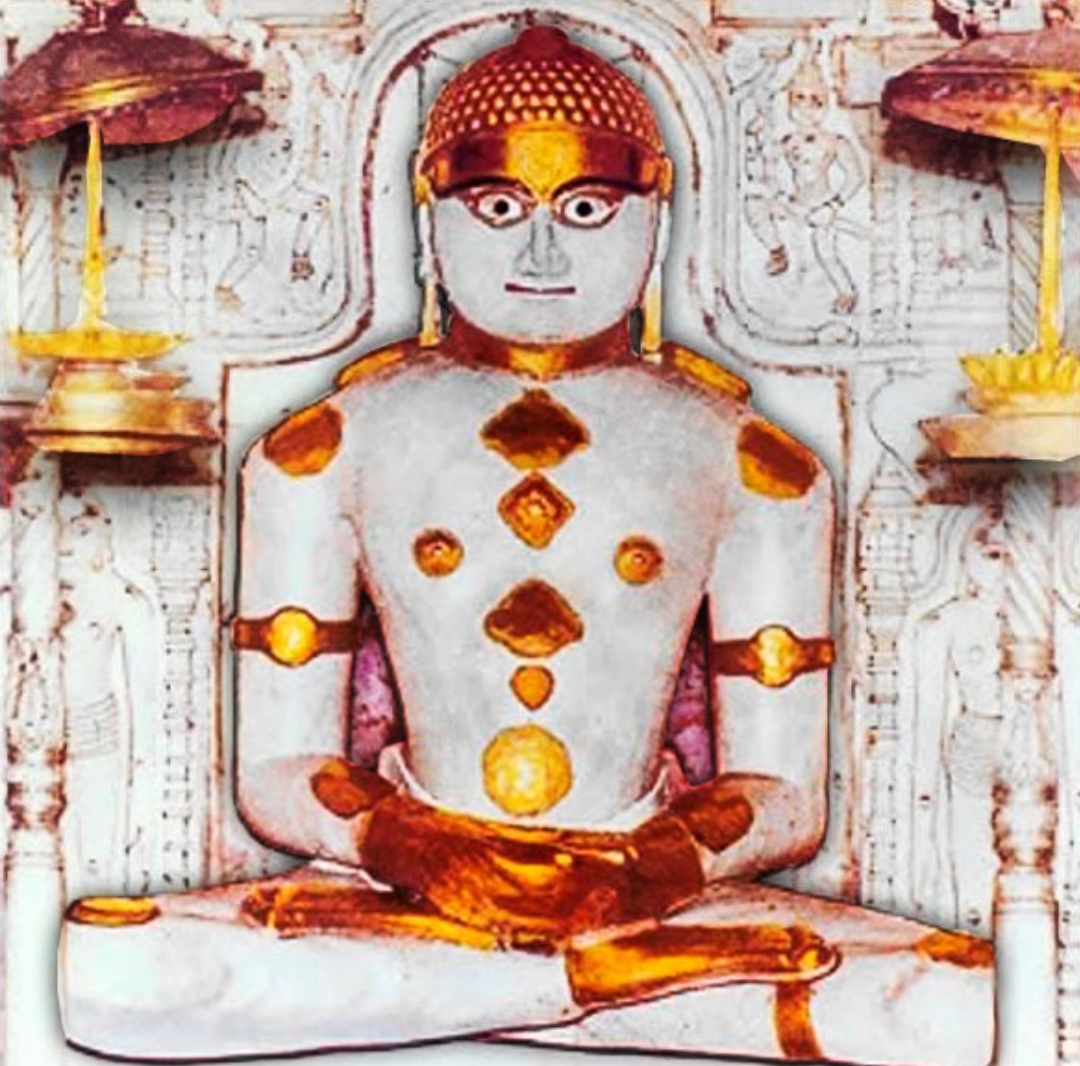
Liberation at Mount Ashtapada
Upon the sacred peak of Ashtapada (identified by tradition with Mount Kailash), Rishabhanatha attains final liberation. The first ford is open. Twenty-three Tirthankaras will follow. The path of the Jinas has begun.
He built the kingdom so that man could live — then walked beyond it so that man could be free.
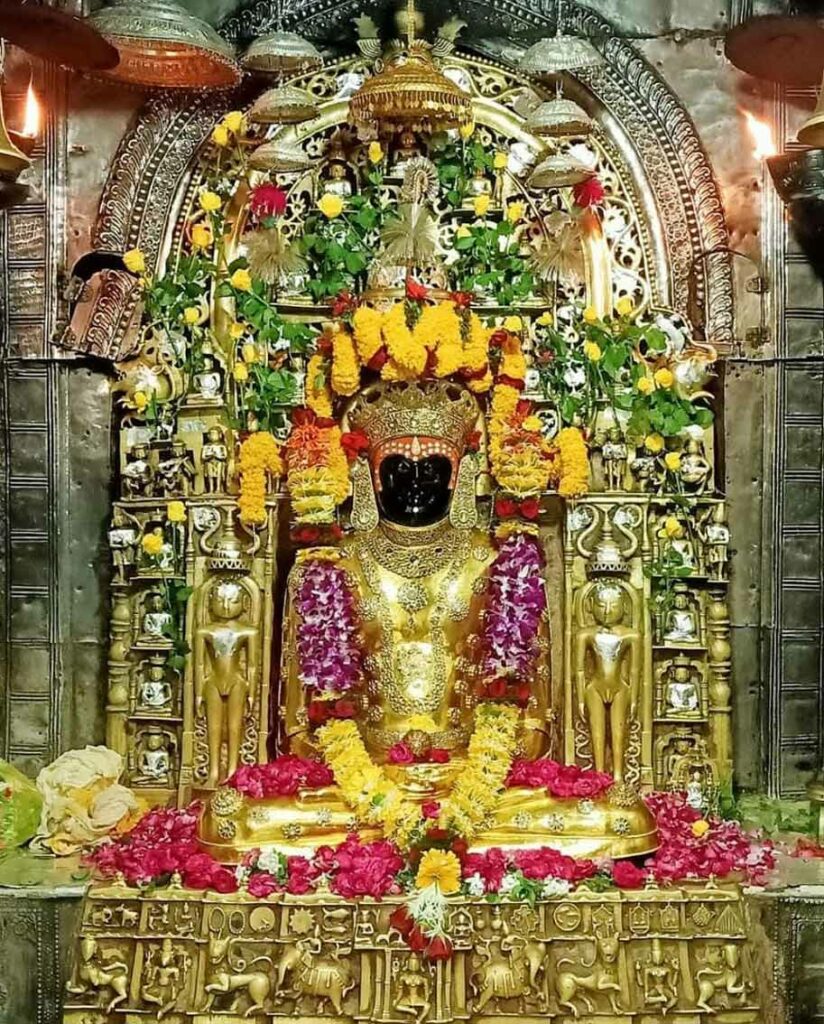
The throne as service. The crown as duty.
Rishabhanatha did not seek the throne — he was given the throne by a civilization in need of order. His reign teaches that kingship is not a privilege but a sacred trust. He fed the hungry, taught the unskilled, codified law, and when the work was complete, he relinquished it all.
This is the original archetype of the philosopher-king — sovereign of the outer world precisely because he was already sovereign of the inner one. Every subsequent Indian ideal of righteous rulership flows downstream from this source.
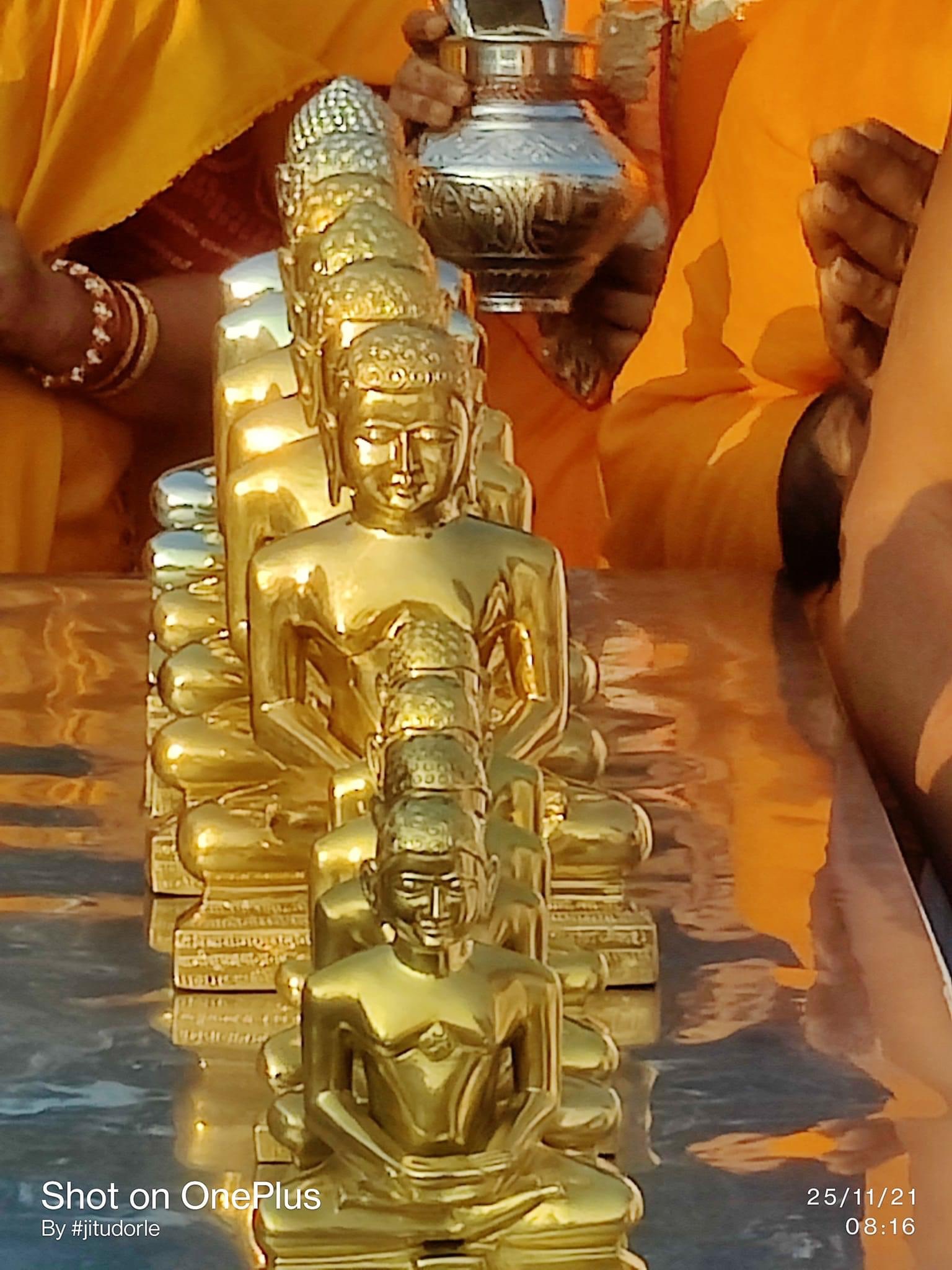
Bharata Chakravarti — and the birth of Bharatavarsha.
Among Rishabhanatha's hundred sons, the eldest — Bharata — became the first Chakravarti, a universal emperor whose dharmic sovereignty extended across the known continent. From him the land received its enduring name: Bharatavarsha — the land of Bharata.
That every Indian, in every age, lives upon a land named for the son of the First Tirthankara, is no historical accident — it is a sacred genealogy of the soul of a civilization.